
Parco Reale di Caserta
Reggia di Caserta - Parco Reale e Giardino Inglese
Type:
Luoghi della cultura; Oggetto fisico
Category:
Museums; Garden and parks
The Royal Park, an
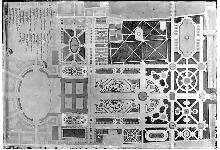
integral part of the project presented by the architect Louis Vanvitelli to the
sovereigns, is inspired by the gardens of the great European residents of the
eighteenth century, merging the Italian tradition of the Renaissance garden with
the solutions introduced by André Le Nôtre in Versailles. The works, with the
delimitation of the area and the planting of the first plants, began in 1753,
at the same time as those for the construction of theCarolineAqueduct,
whose waters from the slopes of Mount Taburno would have fed the fountains of
the royal gardens. The present Park is only in part the realization of the
project of Louis Vanvitelli. The work was completed by his son Carlo, who
reduced the paternal design due to a lack of funds.
The structure is
divided into three parts. The first, just behind the Palace, is destined for
the parterre (a lawn with straight avenues) and includes the so-calledBosco
vecchio(old Wood, because it pre-existed the Palace) in which
theCastellucciastands, a sixteenth-century building, rebuilt
in 1769, as a miniature fortress in which the young Ferdinand IV practiced in
mock battles. The avenues reachPeschiera, an artificial lake with
a small island in the center, embellished with a circular temple.
The second part of
the Park, characterized by the water shows that gush out from the fountains,
arranged in axis with the Palace, starts from the fountain of"Margherita" (Fontana Margherita): two side ramps ascend to
the Bridge of Ercole, where the great "avenue of water" begins.
Following the slope of the hill, water basins, ornamented with statues,
alternate with canals at different levels; two wide avenues, bordered by
espaliers of holm-oak trees and oak groves, flank it until the great basin, in
which an imposing cascade of water falls from the slopes of Monte Briano. The
first fountain along this route is the one known as the fountain of the
“Dolphins" (Fontana dei Delfini) because the water comes out of the
mouths of three big stone fish. Then there is the unfinished fountain of"Aeolus" (Fontana di Eolo), a large exedra in which numerous"caverns" simulate the abode of the winds, represented by numerous
statues of zephyrs. Afterwards seven sloping basins form as many waterfalls and
the route reaches the fountain of "Ceres" (Fontana di Cerere),
symbol of Sicily's fertility, with the statues of the goddess and of the two
rivers of the island. The last fountain depicts the story of "Venus and
Adonis" (Fontana di Venere e Adone). In the basin below the
waterfall of Mount Briano, called "the Bath of Diana" (Fontana di
Diana e Atteone) two important marble groups depict Actaeon when, turned
into a stag by Diana, is going to be eaten by his own hounds and Diana,
surrounded by nymphs, is surprised while leaving from her bath.
The third part is
the English Garden, wanted by Maria Carolina. Lord Hamilton persuaded the Queen
to compete with her sister Marie Antoinette of France in order to overshadow
thePetit Trianonat Versailles. The English Garden was
realized by the English botanist Andrew Graefer, who in 1782, started the work
in the area near theGrand Cascade, where the sloping land towards
the South lends itself to fanciful compositions and to the cultivation of
exotic species. The garden offers a series of suggestive places with strong
references to the models of the time: the Cryptoporticus, with the statues
coming from the excavations of Pompeii and from the Farnese collection; the
small pond in the Bath of Venus, with the false Pompeian ruins; the English
Mansion, home of the gardener Graefer, built on two floors, with a base and
Doric pillars supporting a cornice decorated with medallions, and, lastly, the
Aperìa, an area used as a water tank by Vanvitelli , then used for the breeding
of bees and finally transformed into a greenhouse in 1826. Nearby, there are
four greenhouses in which Graefer planted the plants he was looking for in
Capri, in the Salentino area or in Palermo. Close to them are the Aquarium, intended
for aquatic plants, the Rose Garden and the Botanic School.
Timetable detail (1)
Parco reale
January 8.30-16.00; last
admission at 15.00
February 8.30-16.30; last
admission at 15.30
March 8.30-17.00; last
admission at 16.00
April-September 8.30-19.00;
last admission at 18.00
October 8.30-17.30; last
admission at 16.30
November-December 8.30-15.30;
last admission at 14.30
Giardino inglese
January and November
8.30-15.00; last admission at 14.00
February 8.30-15.30; last
admission at 14.30
March 8.30-16.00; last
admission at 15.00
April-September 8.30-18.00;
last admission at 17.00
October 8.30-17.00; last
admission at 16.00
December 8.30-14.30; last
admission at 13.30
Contacts:
responsible: Tiziana Maffei - website: http://www.reggiadicaserta.beniculturali.it/ - email: re-ce@beniculturali.it - email-certificata: mbac-re-ce@mailcert.beniculturali.it - tel: + 39 0823 1491211 - fax: +39 082 30823
Spatial coverage:
Piazza Carlo di Borbone - 81100, Caserta (Caserta), Campania - Italia