
Duomo di San Flaviano
Type:
Luoghi della cultura; Oggetto fisico
Category:
Religious buildings; Art museums
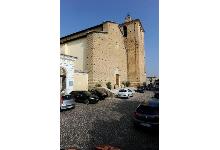
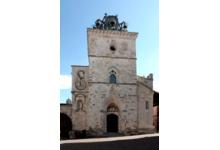
The urban configuration of the Renaissance town of Giulia hinged on San Flaviano Cathedral, rebuilt as from 1470-71 by the Duke Giulio Antonio Acquaviva of Aragon, who gave it his name. The restoration of the church took into account the latest innovation of the time, so that it suggests that Leon Battista Alberti or Giorgio Martini could be the authors of the building plan. San Flaviano Cathedral is one of the most interesting examples of the fifteenth-century architecture typical of the middle Adriatic Coast. Built as from the Seventies of the fifteenth century and accomplished in the Thirties of the sixteenth century, the collegiate church is a typical basilica with central plan, entirely made of brick. The outside consists of an octagonal tambour with pillars fitted in the walls and corbels, surmounted by a smaller dome, around which a cornice with dentils and windows runs. On the top there is a high cupola with a lantern covered with terracotta tiles, which replaced the original blue-glazed ones during the ruinous post-war repairs. The inside, once Baroque, is today divided in eight large recesses, each of which has altars and contemporary art-works by Venanzo Crocetti and Renato Coccia. The church preserves also valuable gold ware, like the gilt-silver case containing San Flaviano's relics, embossed with the portrays of the dukes Acquaviva and old-fashioned garlands and dated to the late fifteenth century, and the fourteenth-century San Biagio's arm carried out by Bartolomeo di Paolo from Teramo.
Spatial coverage:
Piazza B. Buozzi - 64021, Giulianova (Teramo), Abruzzo - Italia

Condizioni d'uso della risorsa digitale:

Quest'opera di MetsTeca è distribuita con Licenza Con attribuzione, no opere derivate, senza riuso commerciale.
Previews
Relations
Is referenced by: consulta la scheda dell'Anagrafe Luoghi della Cultura
see website
Has part: View resource contained
Provider
MuseiD-Italia / --Duomo di San Flaviano
Identifier: mus_9199
Rights
Metadata license: Pubblico dominio