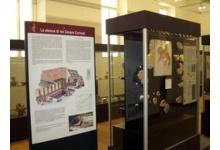

Parco dell’anfiteatro romano e Antiquarium "Alda Levi"
Type:
Luoghi della cultura; Ente/Istituzione
Category:
Archaeological parks; Archaeology museums
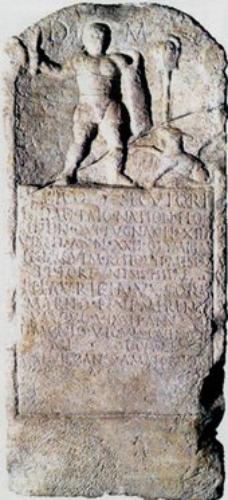
The amphitheatre was built during the first decades of the 1st centuryA.D. and was located in a suburban area outside the town walls and the strip delimited by the present day ‘circle of the Navigli’canal system. The elliptical shaped building presented a façadewith three superimposed orders, awindowed attic and axes of more than 155 metres by 125 metres making it one of the largest amphitheatres inItaly. It heldcontests between gladiators, betweenmen and wild beasts and between animals, it was also the venue for executing people condemned to be torn to pieces by ferocious beasts. More rarely, it hosted Naval battles. The ancient sources offer little information regarding themonument. Paolino, the biographer of St Ambrose talks of Cresconius (396A.D.) being exposed towild beasts on the occasion of Honorius’third consulate and Claudian recollects the celebration for the consulate of Flavius Manlius Theodorus (399 A.D.). The monument fell into disuse after gladiatorial spectacles had been abolished and its superstructure was exploited as a quarry from the late Roman period onward, providing building material for various public constructions within the city including the foundations for the Basilica of S.Lorenzo. The archaeological investigation of themonument that began in the 1930’s and continued in the 1970’s and 1990’swas restarted thanks to the development of the archaeological park, inaugurated along with the nearby Antiquarium in 2004. The park hosts the remains of the foundations of the perimeter walls and of seven radial walls that sustained the pit and tiers for the seating of spectators.
Spatial coverage:
Via E. De Amicis, 17 - 20123, Milano (Milano), Lombardia - Italia
Condizioni d'uso della risorsa digitale:

Quest'opera di MetsTeca è distribuita con Licenza Con attribuzione, no opere derivate, senza riuso commerciale.
Previews
Relations
Is referenced by: consulta la scheda dell'Anagrafe Luoghi della Cultura
see website
Allegato PDF
Documento
Provider
MuseiD-Italia / --Parco dell’anfiteatro romano e Antiquarium "Alda Levi"
Identifier: mus_11412
Rights
Metadata license: Pubblico dominio